 Fagradalsfjall Volcano Trips
What to Wear Hiking Fagradalsfjall: The Full Packing List
Knowing what to wear hiking Fagradalsfjall matters more than at most Icelandic trailheads, because the car parks at Fagradalsfjall have no shops, the weather turns fast and the terrain is sharp, cooled lava with almost no vegetation. This packing guide covers footwear, layers, waterproofs, food and water, the parking app, the safety apps and the season-by-season differences, and it separates what you must bring yourself from what the guided tours supply. Most organized options run 4 to 9 hours door to door, so what sits in your backpack decides how the day feels. If you have not yet chosen between going alone and booking, start with the Fagradalsfjall tour comparison and then pack for the option you pick.
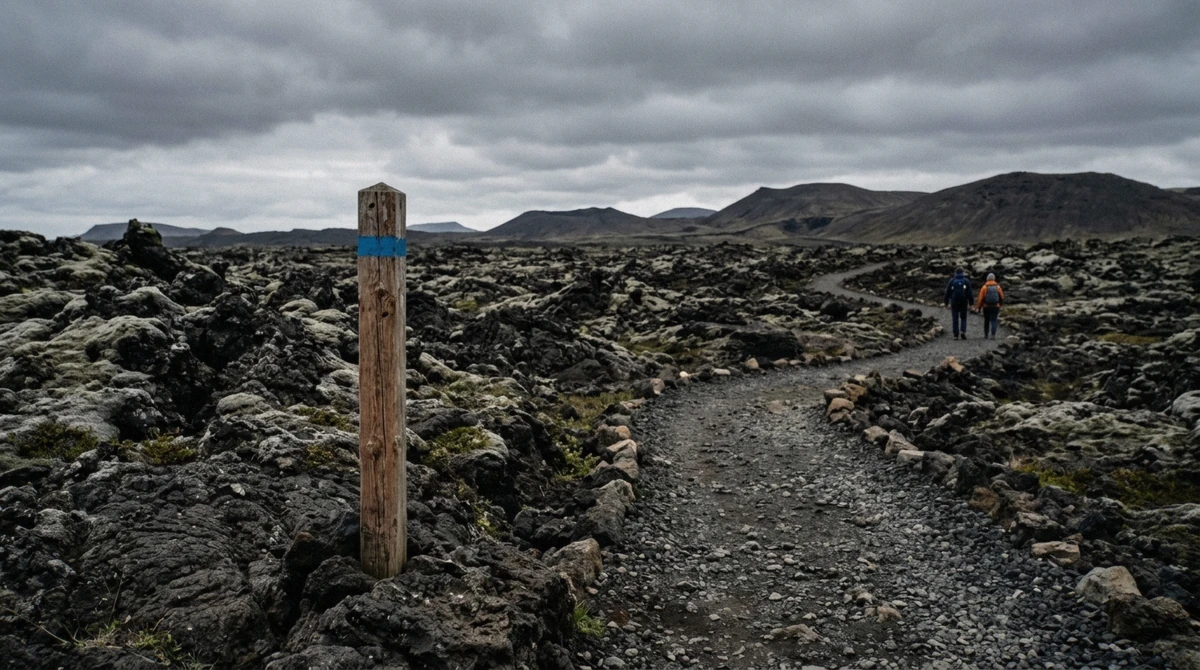
Quick answer Packing in short
Wear waterproof hiking boots, a wool base layer, a mid layer, a windproof and waterproof shell, a hat and gloves, and carry water and snacks, because there are no shops at either car park. Add hiking poles, a headlamp from late autumn through early spring, and the Parka parking app plus the 112 Iceland app on a charged phone. Two guided hikes list jeans as not allowed and one also bans sports shoes, so footwear is the one item you cannot fake.
Key takeaways
- See what each operator already supplies and what you must bring on the all Fagradalsfjall volcano hikes price cards.
- Going alone? Check the marked paths and the car parks first on visiting Fagradalsfjall without a tour.
- The small-group hike with 2Go Iceland Travel asks you to bring your own snacks and water, so pack accordingly.
- Temperatures, wind and daylight swing hard through the year, so check the best time to hike Fagradalsfjall before deciding which season to pack for.
Footwear: The One Item You Cannot Get Wrong
The ground at Fagradalsfjall is broken, razor-edged lava rock. The trails are marked but often loose, wet and steep in places, so ankle-height boots with a grippy sole are the sensible default.
What the terrain demands
The marked routes cross lava fields that were molten as recently as 2023. Sharp clinker, wet moss and smooth rock slabs replace soil for most of the way, and crevasses are expected on the long Meradalir route, Path E, which runs about 18-20 km both ways and takes 5-6 hours. Soft trail runners let every edge through to your foot, and sports shoes are explicitly not allowed on at least one guided hike, the $132 BusTravel afternoon tour. Bring waterproof mid or high-cut hiking boots with a stiff sole and ankle support, and break them in before you fly. The mountain itself tops out at 385 m (1,263 ft), so you do not need mountaineering boots, but you do need footwear that protects your ankles on uneven rock.
Socks matter as much as boots. Wool or synthetic hiking socks, plus a spare pair on record, keep feet dry when the drizzle that is common on Reykjanes soaks the outer layer. Cotton socks stay wet for hours.
What the tour listings themselves say about shoes
The tour descriptions give a direct read on how rough each route is, and the differences are real. The geologist-led hike is rated difficult with rough terrain and states that hiking experience and good hiking gear are necessary, while the small-group 2Go Iceland hike calls the same area moderate with a flexible pace. Two listings ban jeans outright, and one of those also bans sports shoes.
Use the table below to match your footwear and clothing to the hike you booked.
| Tour | Price | Stated difficulty | Clothing rules from the listing |
|---|---|---|---|
| Original local small-group hike | $157 | Moderate, flexible pace | Hiking shoes and thermal clothing, high heels not allowed |
| Hike with a geologist | $159 | Difficult, rough terrain | Warm clothing, food, drinks and hiking shoes necessary |
| Afternoon hike to the eruption sites | $132 | Moderate to hard | Jeans and sports shoes not allowed |
| Volcano and Blue Lagoon day trip | $272 | Moderate, about 2 hours each way | Jeans not allowed |
| Geldingadalir and Reykjanes circuit | $149 | Doable with reasonable fitness | Jeans not recommended |
Clothing: Layers, Not One Warm Jacket
Reykjanes weather changes in minutes, so dress in removable layers with a proper shell on top. The monthly temperature figures below come from a 10-year ERA5 record for the Fagradalsfjall area and from official Keflavík Airport climate normals.
The three-layer system
Start with a wool or synthetic base layer, never cotton. Add a fleece or wool mid layer. Finish with a windproof, waterproof shell jacket and, in anything but high summer, shell trousers or at least quick-drying hiking trousers. Jeans are the classic mistake: two tour listings mark them as not allowed or not recommended, and wet denim stays wet and cold for the rest of a hike that can last 4 hours or more. Pack a hat and gloves in every month except perhaps July and August, and even then keep them within reach, because the summit ridge at 385 m funnels wind even on a calm day in the valley.
Sun protection belongs on the list too, which surprises visitors. There is almost no shade anywhere on the route, and clear skies over a black lava field reflect heat and glare onto your face from below.
How cold it actually gets, month by month
Use the table to pick your layers. The first column is the 10-year average daily mean temperature at the Fagradalsfjall area itself, from the ERA5 reanalysis record for 2016-2025. The second is the official Keflavík Airport daily maximum climate normal, a coastal reading that runs milder than the hiking trails.
Pack for the first number, not the second, because wind on the ridge makes the felt temperature lower still.
| Month | Area daily mean (2016-2025) | Keflavík daily max normal | Packing note |
|---|---|---|---|
| January | 0.6C | 3.4C | Full winter kit, headlamp, consider crampons |
| April | 4.4C | 6.7C | Shell, mid layer, hat and gloves |
| July | 11.1C | 14.2C | Light layers, windproof shell, sun protection |
| October | 5.5C | 7.6C | Waterproofs, gloves, headlamp for short days |
| December | 1.2C | 3.7C | Full winter kit, headlamp, consider crampons |
Waterproofs are not optional
Reykjanes sits in the path of Atlantic weather fronts, and the Keflavík area averages about 1,377 mm of precipitation a year, so a rain jacket that also blocks wind does double duty. Cheap ponchos disintegrate in the gusts that funnel across the treeless plateau. Check the Icelandic Met Office forecast at en.vedur.is for wind as well as rain before you set out.
Food, Water and the Parking App
There are no cafés, shops or staffed kiosks at the P1 or P2 trailhead car parks. Everything you eat and drink has to come with you, and parking is paid by app only.
Water and food
Carry enough water for the whole walk, since Path A alone is about 2-2.5 hours of hiking one way, and more for Path E, the 18-20 km Meradalir route that takes 5-6 hours. Bring food even on a short outing: the guided hikes make this explicit, with the 2Go Iceland small-group hike listing snacks and water as not included, and the geologist hike stating that food and drinks must be brought. A sandwich, nuts and a chocolate bar cover a standard half day.
On the minibus and combo tours, lunch is a separate matter too: the ICELANDIA tour and the Reykjavik Excursions tour both stop in Grindavík for a fish and chips lunch that is billed as an extra fee on top of the tour price.
Parking money and the Parka app
If you drive yourself, parking costs 1,000 ISK (about $8) for a ticket valid 24 hours, paid electronically through the Parka app or at parka.is. P1 at Geldingadalir and P2 at Stóri-Leirdalur each have their own payment link, so install Parka and set up a card before you leave Reykjavík. Portable toilets are sometimes set up at the main parking areas, though no official page confirms this consistently, so treat them as a bonus rather than a plan.
On guided tours with Reykjavík pickup you skip the parking fee, and the self-drive option of the small-group hike leaves it to you.
The phone and the apps that matter
A charged phone is safety equipment here, not a convenience. Load three things before you set out. First, the free 112 Iceland app from ICE-SAR, which sends a text-style report with your GPS location to the emergency operator without a call and needs only ordinary mobile signal, not data.
Second, the gas forecast at loftgaedi.is, because volcanic gas is odourless, invisible and can collect quickly at the site. Third, the road status on road.is or umferdin.is, since closures change with volcanic activity. The main emergency number is 112, with 599-0112 as the backup if a call drops or the connection is poor.
A power bank on record is cheap insurance on a 4-hour or longer day in the cold, which drains batteries fast.
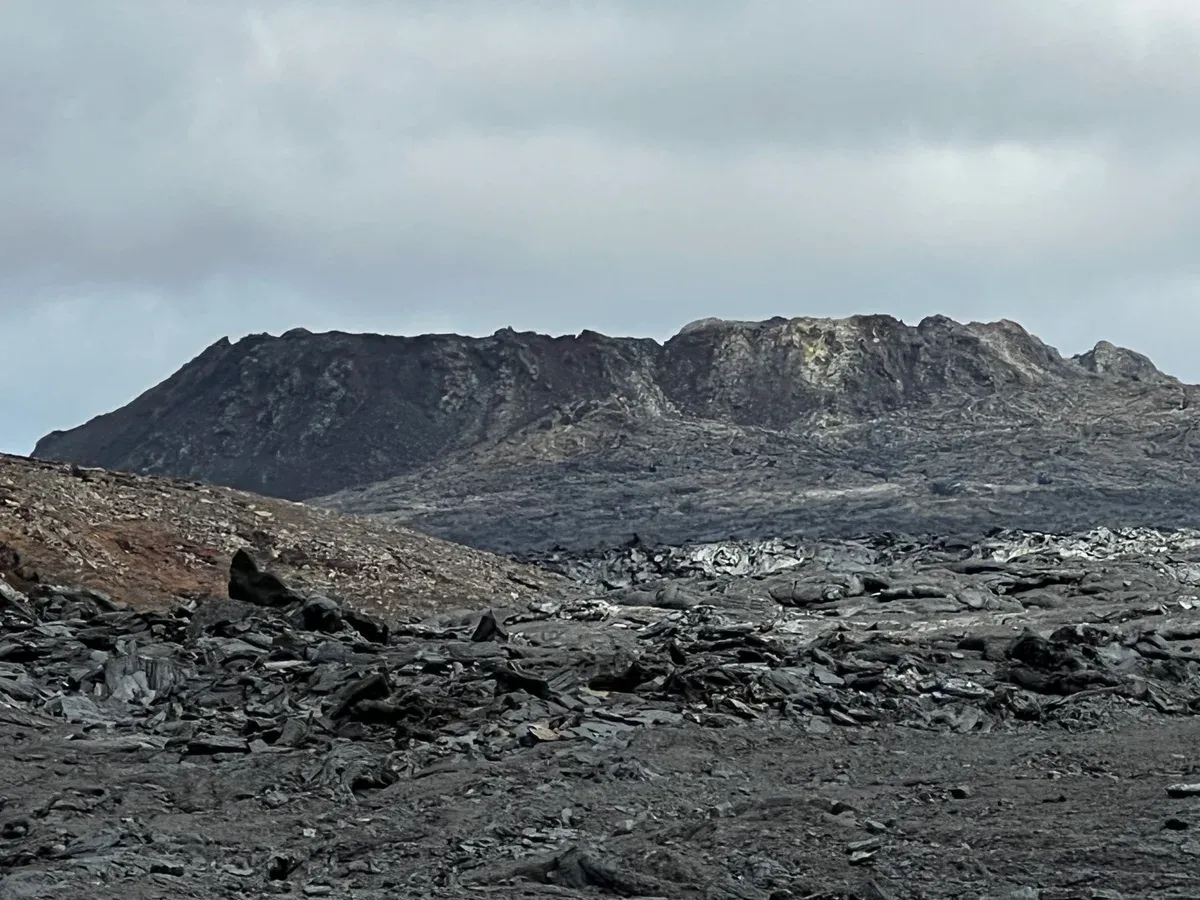
The Geldingadalir crater has been cold and silent since its 2021 vent shut down. Photo: Stefan mohanu, CC BY-SA 4.0, via Wikimedia Commons
Seasonal Additions: Poles, Crampons, Headlamp
The core list stays the same all year, but the dark months and icy spells add three items that change the hike from miserable to manageable.
Poles
Trekking poles take load off your knees on the descent and help on loose lava gravel. The small-group hike includes complimentary hiking poles, with crampons in winter. One BusTravel listing rents poles for $9 per person as an optional extra, so on that tour budget the $9 or bring your own.
On the difficult geologist-led route across rough terrain, poles earn their weight.
Ice gear
From late autumn into spring, ice can cover the upper sections of the marked paths, and simple microspikes or crampons turn an impassable slope into a routine walk. Two listings supply them: the small-group hike includes crampons in winter and the geologist hike provides them if needed. Bring your own if you hike the trails independently in the cold months.
If you would rather not carry ice gear, shift your visit to the summer months, when the July area average of 11.1C and the long days make the same routes far simpler. The month-by-month detail lives on the Fagradalsfjall season guide, so this page will not repeat it.
Headlamp and dark-month timing
Daylight is the binding constraint in winter. In September alone, Reykjavík loses more than three hours of daylight, with sunrise moving from 06:10 to 07:34 and sunset from 20:47 to 19:03 across the month, and the trend continues into the darker months. A headlamp with fresh batteries belongs on record from roughly October through March, and several listings supply one: the afternoon hike and the 9-hour BusTravel eruption-site tour include a headlamp, and the geologist hike and the Blue Lagoon day provide one if needed.
Starting early is the other half of the fix, a point covered in depth on the common Fagradalsfjall mistakes page.
What Guided Tours Supply, So You Do Not Overpack
Booking a tour trims the packing list, but not by as much as some listings imply. This section compares what each option actually includes and what you still carry yourself, using the prices and inclusions stated in each listing.
Transport, transfer and gear
Nearly every hike and combo tour here includes round-trip transport from Reykjavík on at least one booking option, so you can leave the car keys and the parking app behind. The helicopter flight at $514 is the outlier, meeting directly at the Glacier Heli base with no pickup. Beyond transport, the list of supplied gear is short.
The main things operators provide are the bus, the guide and, on several listings, a headlamp. Food never comes included on the hikes, hiking poles are free on the small-group hike and a $9 rental on one other tour, crampons come with two hikes, and no listing includes boots, waterproofs or warm layers. Pack as if you were walking alone, then enjoy not needing the parking money or the map.
Price against what you still must bring
The table sets the tour price next to the items the listing leaves to you. It exists so you can see the real gap between a $113 ticket and a $272 one before deciding what belongs in your backpack.
| Tour | Price | You still bring | Supplied by the operator |
|---|---|---|---|
| Reykjanes minibus loop | $113 | Weather clothing, water, snacks | Transport, guide, 1-hour Nátthagi viewpoint hike |
| Afternoon eruption-site hike | $132 | Hiking boots, food, water, no jeans | Coach from Reykjavík, guide, about 3 hours at Geldingadalir |
| Small-group local hike | $157 | Snacks, water, warm layers | Van transfer or Grindavík meeting point, guide, hiking poles, crampons in winter |
| Meradalir hike plus northern lights | $185 | High-fitness kit, poles if wanted ($9 rental) | Two pickups, guide |
| Volcano and Blue Lagoon day | $272 | Swimwear, towel, hiking boots, no jeans | Comfort lagoon entry with towel and drink, transport |
The honest note on gear and what you will actually see
No piece of kit changes the central fact of the site today: nothing is erupting, and every tour walks cooled lava from the 2021, 2022 and 2023 Fagradalsfjall eruptions, while the newer Sundhnúkur activity near Grindavík has no public trails at all. Sturdy boots will not conjure flowing lava, and at least one tour listing in the market still uses eruption-era copy that is years out of date, so read the current description carefully. What good gear does change is comfort, safety and how far you get.
The Met Office reported no active eruption and continuing ground uplift beneath Svartsengi in its latest update, so check the gas and closure picture the morning you hike on the Fagradalsfjall safety guide.
Sources: Visit Reykjanes, hiking and parking and Safetravel.is
Packing Dos and Don'ts at Fagradalsfjall
A short checklist of the decisions that matter most on the trail, each with the reason behind it.
Do
- Do wear ankle-high waterproof hiking boots, because the trails cross sharp, loose 2021-2023 lava and one guided listing bans sports shoes outright.
- Do install the Parka app and the free 112 Iceland app before you leave Reykjavík, because parking at the trailhead costs 1,000 ISK (about $8) payable by app only and the safety app needs no data connection.
- Do pack a hat, gloves and a spare wool layer even in summer, because the area's warmest monthly average is only 11.1C and the 385 m ridge is exposed to wind.
- Do carry plenty of water and real food, because there are no shops, cafés or staffed kiosks at the P1 or P2 car parks.
- Do check the gas forecast at loftgaedi.is and the weather at en.vedur.is on the morning you hike, because volcanic gas is invisible and odourless and fronts arrive fast.
Don't
- Don't wear jeans, because two tour listings ban them and wet denim stays cold for hours on a 4-hour hike.
- Don't rely on portable toilets at the car parks, since sources conflict on whether they are present, so plan as if there are none.
- Don't set out in the dark months without a headlamp, because sunset in Reykjavík falls from 20:47 to 19:03 across September alone and keeps dropping.
- Don't leave your phone uncharged, because it carries your parking payment, the gas forecast, road status and your emergency link to 112.
- Don't assume a tour price includes boots, food or poles, because no hike listing includes boots or food and poles run $9 to rent on one tour.
Frequently Asked Questions
What footwear do I need for the Fagradalsfjall hike?
Waterproof hiking boots with ankle support and a stiff, grippy sole. The routes cross sharp cooled lava with wet moss and loose gravel, and the geologist-led hike at $159 is rated difficult with rough terrain where hiking experience and good hiking gear are stated as necessary. One $132 listing goes further and marks sports shoes as not allowed, so see the Fagradalsfjall tours from Reykjavík and Grindavík for what each hike demands.
Can I wear jeans on the Fagradalsfjall hike?
No. Jeans are listed as not allowed on the BusTravel afternoon hike and the Blue Lagoon combo, and not recommended on the Kalman Tours circuit. Wear quick-drying hiking trousers with a shell layer over them in wet weather, and match the rest of your clothing to the season you hike in.
Do I need to bring food and water to Fagradalsfjall?
Yes, always. There are no cafés, shops or staffed kiosks at the P1 or P2 car parks, and guided hikes list food and drinks as not included, with one $157 small-group hike saying so explicitly. Carry enough water and snacks for a 4-hour day, or plan the fish and chips lunch in Grindavík that some combo tours stop for as a separately billed extra.
What gear do guided Fagradalsfjall tours provide?
Transport, a guide and very little else. Round-trip Reykjavík transport is included on the hike listings, several hikes supply a headlamp, the small-group hike includes poles and winter crampons, and hiking poles cost $9 per person to rent on the Meradalir and northern lights combo. No listing includes boots, waterproofs, food or water, so pack as if you were hiking alone.
Do I need a headlamp at Fagradalsfjall?
From roughly October through March, yes. Reykjavík's sunset moves from 20:47 to 19:03 across September alone and keeps falling into winter. The safety guide explains why finishing in daylight also matters for gas, closures and emergency contact.
Can I hike Fagradalsfjall without a guide, and what do I need for that?
Yes, no guide is required. You need boots and layers as above, plus the Parka app to pay the 1,000 ISK (about $8) parking fee at P1 or P2, the 112 Iceland app on a charged phone, water and food, and a map of the marked paths. The full route-by-route setup is on hiking Fagradalsfjall without a tour.
What should I not bring or wear on the hike?
Leave jeans, sports shoes, cotton base layers and a lone fashion rain jacket at home, and do not count on buying anything at the trailhead because there are no shops. Also leave the expectation of lava behind: nothing is erupting, so every route walks cooled 2021-2023 lava, a point the what you will see guide explains in full.